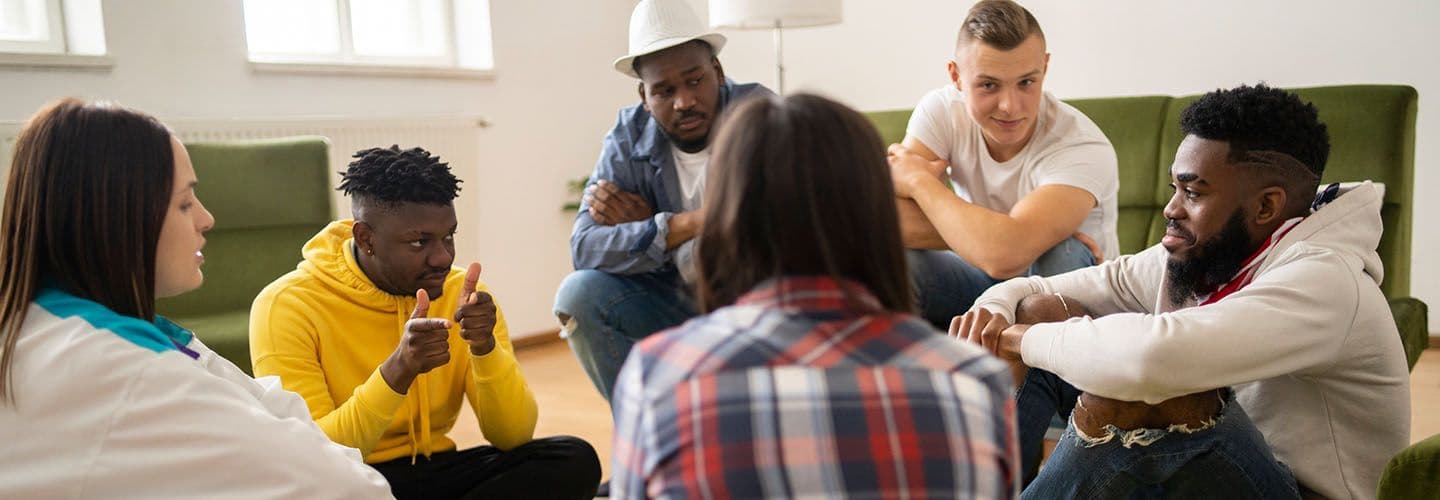

This two-part series shares learnings from the Break the Cycle research team’s community events, including themes and recommendations to address community violence. The research team, comprised primarily of youth from Washington, DC’s 7th and 8th Wards, has written this blog to capture themes and learnings from their own perspective.
We are Break the Cycle, a team of young researchers (ages 15-18) from Wards 7 and 8 in Washington, DC. For the past 6 months, we have learned about community violence and problem solving, and have focused on finding recommendations to address violence in our neighborhoods. We hosted two community events that resulted in community members outlining recommendations to eliminate violence in the community. Recommendations include policy changes, programmatic changes, and behavioral changes. Below, we share four key recommendations that emerged from our community events.
See our earlier research brief for more on what we learned from the community events.
1Policy Change Idea: Expand anonymous reporting and safe firearm disposal, paired with cross-jurisdictional enforcement.
In DC, community members recognized that, while many firearm regulations already exist, additional supports could reduce illegal guns in circulation. Specifically, they suggested implementing anonymous tip lines and safe gun drop-off locations, particularly if paired with stronger, more consistent enforcement across DC, Maryland, and Virginia.
Establish confidential hotlines and secure, accessible gun surrender points within communities. While research shows mixed direct impacts of gun buyback and drop-off programs on firearm violence, these efforts can produce other benefits, including increased safe ownership awareness, education, and practices. Evidence also supports the use of anonymous reporting systems (ARSs) (e.g., hotlines, mobile applications, or text lines) to prevent violence, with studies in school settings demonstrating reductions in violent incidents when ARSs are in place. ARSs allow individuals to safely and confidentially share information about potential threats, illegal activity, or unsafe situations without fear of retaliation. For these approaches to be effective, however, they must be accompanied by consistent enforcement of existing laws. Regional law enforcement agencies should strengthen coordination to close enforcement gaps across state lines, ensuring that background checks and waiting periods are applied as intended in each jurisdiction. Improved collaboration would reduce the number of illegal guns in circulation and enhance neighborhood safety, particularly for youth.
2Programmatic Change Idea: Build more community centers that offer structured activities and create safe, clean public spaces open during peak youth hours.
Protective community resources refer to the community-level characteristics that positively influence children’s growth and development. One recommendation would be to invest in new and improved centers like Boys and Girls Clubs, open after school until curfew and offering sports, camps, and social events. After-school programs and community centers provide safe environments by offering positive activities and peer and adult relationships. Studies in urban environments also indicate that green spaces reduce the risk of violence. Building on this evidence, communities can invest in green spaces such as playgrounds and skate parks and support community-driven activities like neighborhood beautifications, business nights, and empowered neighborhood watch groups. Restoring vacant land, implementing community-engaged crime prevention through environmental design, hosting Business Improvement Districts, and creating neighborhood watch groups can also strengthen community bonds, decrease instances of crime and violence, and keep spaces safe.
3Behavioral Change Idea: Provide accessible, diverse mental health services through multiple community points, including schools, clinics, and mobile units.
Research highlights the challenges preventing boys and men from accessing mental health services, including expectations around traditional masculinity, socialized norms, and stigma. Prioritize hiring more male therapists to meet community needs. Whether in school, out-of-school time programs, or health care settings, offer workshops, individual, and group therapy (including anonymous sessions) with both in-person and online options. Increasing access to mental health services and offering trauma-informed care in these spaces is critical, particularly for youth. Additionally, programming can be regularly updated with guest speakers to address trauma and promote emotional healing, helping youth build resilience and reduce violence.
4Behavioral Change Idea: Offer parenting classes and family support programs focused on building strong relationships and improving youth outcomes.
Evidence has consistently shown the benefits of parent involvement in youth lives, including improved youth academic success and social skills and emotional well-being. One recommendation might be to provide age-specific parenting workshops at community centers covering topics like teen decision making and child development. Another idea is to create parent support groups to share guidance and build a supportive network. Strengthening parental engagement can support healthy youth and reduce risk factors for violence.
Final Thoughts
In a community without violence, we envision community bonding, networking, and peace. We also see parents being more involved in their children’s lives and young people growing up past age 18. In a community without violence, we picture youth coming together to socialize and spaces where kids can go outside without fear of getting stuck in a crossfire. We also see police engaging and protecting the community instead of using fear.
As highlighted in the shared recommendations, we want our community to change in a few different ways after completing this project. We would love to see more socializing and getting to know one another through community events, or through the creation of traditions, murals, and group stories. We would also like more peaceful interactions with the police.
Through the community events, we learned a lot about the community’s hope for a future without violence. We learned that community members want our communities to change and improve. And via the analysis process, we learned about problem solving and finding recommendations to address community violence. We found areas that need improvement and developed recommendations to eliminate the issues facing the community. In the future, we want youth to be able to express themselves with art and creativity instead of turning to violence and causing problems.
The first community event took place after school at the Phelps Architecture, Construction and Engineering High School. The audience at this event consisted of peers, classmates, and friends. The second community event was at Martin Luther King Jr. Memorial Library and was attended by members of the community, policymakers, advocates, and government workers from Wards 7 and 8. Both events featured a presentation of findings from the research that the Safety 7 research team completed. The bulk of the event focused on the interactive portions of the research.
During the events, participants were asked to create boards that discovered, dreamed, developed, and delivered recommendations to community violence. The “Discover” step was about both identifying the good things in our community and responding to the research findings that were presented. The “Dream” step was about coming up with as many recommendations as possible to addressing community violence. The “Design” step was about taking one of the recommendations that came up in the Dream stage and trying to make it more specific. This stage aimed to translate hope into visual representations of an ideal community. The “Deliver” step entailed each group presenting their boards at the end of creating them.
We analyzed the boards from community events by breaking them down into sections and finding themes and similar recommendations amongst each of the stages. We did this by grouping all the boards by order of completion and reviewing each step separately—for example, all the Discover boards together, Dream boards together, and Design boards together. After finding common themes among the boards, we grouped them by table and came up with a list of themes and similarities per group. Once the boards for each community event were reviewed, the themes we found were categorized and summarized.
The Break the Cycle research team includes Demaya Brown, Nalej Francis, Nicolas Cerda, Shane Coffen, Natalie White, and Bianca Faccio. Break the Cycle was supported by Quiana Lewis Wallace, Deja Logan, Samantha Holquist, and Jennifer Widstrand.
This project was supported by Award No. 15PNIJ-22-GG-01420-RESS, awarded by the National Institute of Justice, Office of Justice Programs, U.S. Department of Justice. The opinions, findings, and conclusions or recommendations expressed in this publication are those of the author(s) and do not necessarily reflect those of the Department of Justice.
Suggested citation
Break the Cycle Research Team. (2025). Youth-led recommendations to address community violence in Washington, DC. Child Trends. DOI: 10.56417/7760e2705f