
This two-part series shares learning from the Break the Cycle research team’s community events, including themes and recommendations to address community violence in Washington, DC. The research team, comprised primarily of youth from Washington, DC’s 7th and 8th Wards, has written this brief to capture themes and learnings from their own perspective.
We are Break the Cycle, a team of young researchers (ages 15-18) from Wards 7 and 8 in Washington, DC. For the past 6 months, we have learned about community violence and problem solving, and have focused on finding recommendations to combat violence in our neighborhoods.
This research topic was important to us because there have been high rates of community violence in urban neighborhoods across the country. With support from Sasha Bruce Youthwork and Child Trends, we have explored these challenges in community outreach events, called hackathons, to see how community members suggest we combat violence in our community.
Conducting youth-led community events
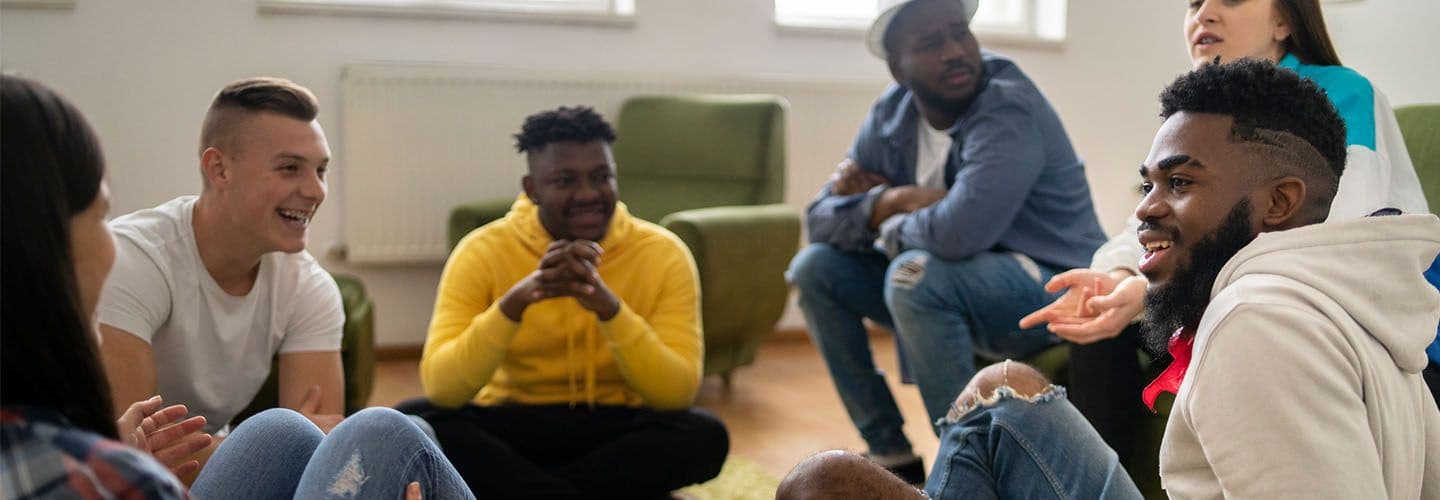
This Youth Participatory Action Research (YPAR) project is about finding recommendations to combat community violence experienced by Washington, DC residents in Wards 7 and 8. We planned two community events to understand what members of our community suggest as recommendations to address community violence. The first event included 30 youth participants while the second engaged 21 adult participants. During the events, participants were asked to create boards that discovered, dreamed, developed, and delivered recommendations to tackle community violence. We analyzed the boards to identify common themes about community recommendations for violence. The most prevalent themes that came up in our analysis are described in the next section.
Community Violence Prevention Themes
1Unity, healing, and safe spaces are essential to preventing violence and building stronger, safer neighborhoods.
Community members emphasized that improving public safety starts with strengthening relationships and trust among neighbors. They expressed a strong desire for greater unity: bringing people together through shared activities, events, and intentional efforts to rebuild connections that have been fractured by violence and trauma.
Participants highlighted the urgent need for community healing, especially in neighborhoods where tensions or “beefs” between groups have fueled cycles of conflict. They stressed that addressing the emotional and psychological impacts of violence is critical to breaking these cycles and creating lasting peace.
Community members also saw safe, clean, and accessible community spaces as being vital. These spaces give residents—especially youth—places to gather, build positive relationships, and engage in structured activities that keep them away from dangerous environments. Participants described how creating opportunities for connection, joy, and healing is a key strategy for reducing violence and strengthening the fabric of the neighborhood.
2Gun control is seen as essential for reducing community violence and creating safer neighborhoods.
Participants believed that stricter gun laws are necessary to address the ongoing violence in their communities. They emphasized their belief that limiting access to firearms would reduce shootings, save lives, and make public spaces safer for everyone.
There was also support for proactive strategies like gun buyback events, seen as practical ways to remove unwanted or illegally owned firearms from the streets. Participants expressed that, without meaningful action to control guns, violence will continue to threaten the well-being and stability of their neighborhoods. Gun control, they emphasized, is not just a legal issue but a vital step toward community healing and violence prevention.
3Youth want better schools that provide safety, support, and skills for their futures—key factors in preventing community violence.
Youth consistently voiced the need to transform schools and the broader education system as part of a vision for safer, more supportive communities. They identified schools as a cornerstone of their ideal community, alongside recreation centers, green spaces, shopping centers, and other essential infrastructure. (Child Trends’ research refers to these resources and supports as “protective community resources”; see box.) However, the youth also emphasized that current schools often fall short, contributing to the cycles of instability and violence they see in their communities. They shared how schools often lack curricula that prepare students for adulthood, offer inadequate mental health supports, and use punitive measures instead of supporting constructive recommendations to address students’ challenges.
Protective Community Resources
Child Trends has partnered with community members and national organizations to identify the resources Black children, youth, and families themselves view as protective against risk and harm—both those they currently have access to and those they lack but desire. These resources, known as protective community resources, are crucial to ensuring that all children, youth, and families can flourish in the communities they call home.
Youth called for schools that offer not only better food and more after-school programming, but also therapeutic mental health resources and more engaged, supportive teachers. These changes, they argued, would give students the emotional support and structure they need to stay focused and connected, thereby reducing the likelihood that young people will become involved in violence.
Participating youth also stressed the need for education to include life skills, financial literacy, and job training—tools that could open up real opportunities and reduce the economic insecurity that often underlies community violence. In addition, youth advocated for schools to adopt positive youth development approaches, which emphasize strengths-based, empowering relationships rather than punitive or neglectful systems.
Finally, youth identified safety in schools as a top priority. They highlighted that when schools are unsafe—physically or emotionally—they become breeding grounds for conflict, fear, and disengagement. By transforming schools into places of safety, belonging, and opportunity, youth believe that communities can address root causes of violence and build stronger, more hopeful futures.
4Youth see personal growth as a foundation for preventing violence and building stronger, more connected communities.
Participants emphasized that individual growth—through self-reflection, personal responsibility, and willingness to change—is essential for creating safer neighborhoods. The promise of this growth is not just for youth, but for all community members. When individuals commit to bettering themselves, they are more likely to resolve conflict peacefully through understanding others’ perspectives and to contribute positively to their surroundings.
Participants also spoke about the importance of creating spaces for people to socialize and connect in healthy, respectful ways. Personal growth fosters empathy and accountability, which are key to breaking cycles of violence and building trust in communities—especially in neighborhoods like Wards 7 and 8, where disconnection and trauma have often fueled instability. By investing in personal development, individuals become catalysts for broader community change and healing.
5Families play a vital role in preventing community violence by fostering supportive, stable home environments.
Participants emphasized the need for a cultural shift in how families engage with youth. They noted that when parents are actively involved—for example, by offering guidance, setting examples, and mentoring their children—youth are more likely to make positive choices and less likely to be influenced by harmful messages on social media or drawn into violence. A strong family presence can counteract negative external influences and serve as a protective factor against community violence.
Youth and adults also called for reducing the stigma around asking for and receiving mental health support, emphasizing that healthy families are built on strong communication and coping skills. They viewed mental health services not only as a tool for individual well-being but also as a way to strengthen entire households by helping families navigate stress, resolve conflict, and build resilience.
However, participants noted significant barriers to accessing mental health services, including cost, transportation challenges, and doubts about effectiveness. The participants believe that addressing these access issues and normalizing the use of mental health support would help families heal and thrive, thereby reducing the household stressors that often contribute to violence in the broader community.
6Community members are divided on whether the presence of police reduces violence or causes more harm—highlighting the need to rebuild trust and reimagine public safety.
There was no clear consensus on the desired role of police in addressing community violence. Some participants supported an increased police presence, believing it could deter crime and make neighborhoods feel safer. Others, however, strongly opposed this view, citing personal and collective experiences of racial profiling, excessive force, and lack of accountability.
For many, the relationship between police and the community is deeply strained—so much so that some respondents felt that a police presence could escalate tensions rather than reduce them. This mistrust creates uncertainty around whether policing helps or harms efforts to build safer neighborhoods.
Participants emphasized that unless this fractured relationship is addressed, efforts to reduce violence will remain incomplete. Building real community safety, they argued, requires investing in alternatives like violence interruption programs, community-led safety efforts, and healing justice approaches that center accountability, trust, and care.
Final Thoughts
These six themes reflect a shared community vision for reducing violence by addressing its root causes: disconnection, trauma, and lack of opportunity. From stronger schools and supportive families to safe spaces, personal growth, and community healing, residents emphasized that lasting safety will come from investing in people and relationships. Real change, they stressed, requires trust, unity, and community-led recommendations.
Creative Expression From Our Experience
Shane, a youth researcher, wrote a poem that outlines our lived experiences and describes a community that deals with violence and other issues, like drugs and trauma. We hear stories and perspectives from all sorts of people, but we will never know what the streets see, how they might perceive us, or how an outsider would view our community; this poem is an interpretation of these issues from the street’s perspective. This poem is intended for people in communities that have been through trauma and those who recognize violence as a problem. It includes language some people may find offensive.
IF THE BLOCK HAD EYES
Author: Shane Coffen
If you could speak to the block, what does it say, “that the people are the danger, that these young niggas believe that Power is dominance trying to make a name for yourself to be a what!” Are you another dead nigga or the person behind pulling the trigger on me? Because I am the block and this is what I see.
If you could speak to the streets, what did it see “bullets, blood, drugs! The same road we live on the police take their time patrolling during the day, but when something happens, they not even close as a block away; just another crime they say, but another death awaits” that is what the Streets would say.
What does the window see “a momma seeing her 13-year-old Babby buying weed, now cool trying to be another me, not the me who sees, but the me who wants to be seen; not by the family but by the streets.” But the true question is what do the people see?
The poem includes themes about lack of trust in police and systems that are supposed to keep the community safe. It also talks about being a teen trying to fit in and living in a community with access to guns and substances that have become normalized and common. We were inspired to write this poem because, through this project, we understood that a lot of people in our community are also experiencing trauma and community violence; it’s not just us.
Methodology
The first community event took place after school at the Phelps Architecture, Construction and Engineering High School. The audience at this event consisted of peers, classmates, and friends. The second community event was at Martin Luther King Jr. Memorial Library and was attended by members of the community, policymakers, advocates, and government workers from Wards 7 and 8. Both events featured a presentation of findings from the research that the Safety 7 research team completed. The bulk of the event focused on the interactive portions of the research.
During the events, participants were asked to create boards that discovered, dreamed, developed, and delivered recommendations to community violence. The “Discover” step was about both identifying the good things in our community and responding to the research findings that were presented. The “Dream” step was about coming up with as many recommendations as possible to addressing community violence. The “Design” step was about taking one of the recommendations that came up in the Dream stage and trying to make it more specific. This stage aimed to translate hope into visual representations of an ideal community. The “Deliver” step entailed each group presenting their boards at the end of creating them.
We analyzed the boards from community events by breaking them down into sections and finding themes and similar recommendations amongst each of the stages. We did this by grouping all the boards by order of completion and reviewing each step separately—for example, all the Discover boards together, Dream boards together, and Design boards together. After finding common themes among the boards, we grouped them by table and came up with a list of themes and similarities per group. Once the boards for each community event were reviewed, the themes we found were categorized and summarized.
The Break the Cycle research team includes Demaya Brown, Nalej Francis, Nicolas Cerda, Shane Coffen, Natalie White, and Bianca Faccio. Break the Cycle was supported by Quiana Lewis Wallace, Deja Logan, Samantha Holquist, and Jennifer Widstrand.
This project was supported by Award No. 15PNIJ-22-GG-01420-RESS, awarded by the National Institute of Justice, Office of Justice Programs, U.S. Department of Justice. The opinions, findings, and conclusions or recommendations expressed in this publication are those of the author(s) and do not necessarily reflect those of the Department of Justice.
Suggested citation
Break the Cycle Research Team. (2025). Learnings from youth-led community events to address community violence in Washington, DC. Child Trends. DOI: 10.56417/7265p2386y