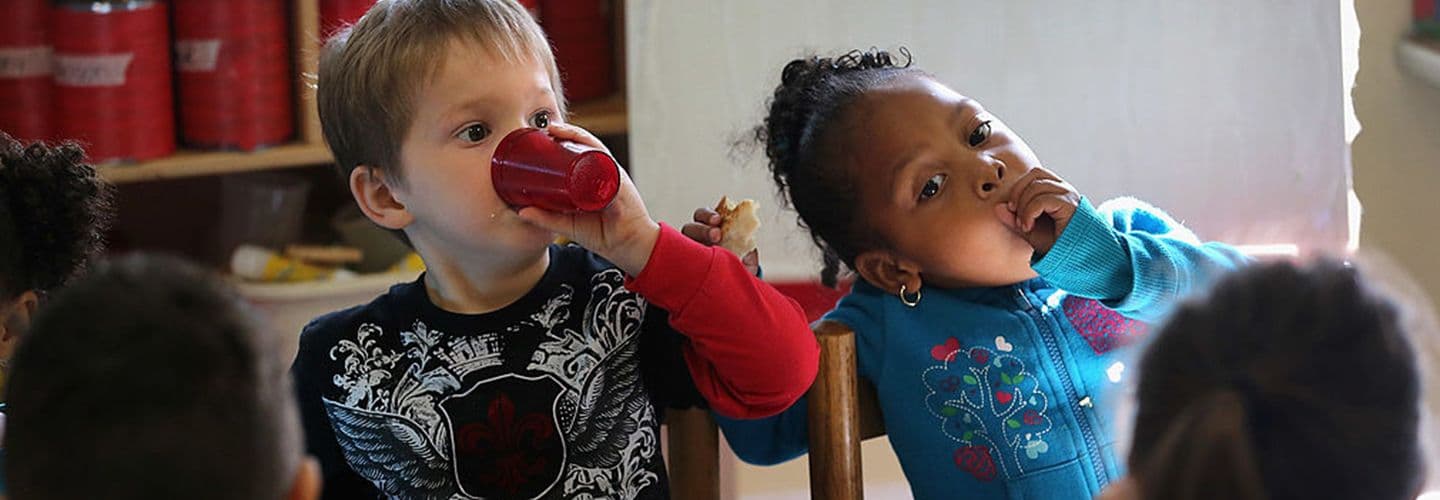


Head Start is a two-generation program that supports children and families with low incomes through comprehensive child development and family support services. Family services include providing families with direct services and supports (e.g., free meals, screenings and assessments, parenting programs) and connecting them to needed resources in the community.
As a well-established and trusted direct service provider for families with low incomes and young children, Head Start was well positioned to be a crucial source of support for families during the COVID-19 pandemic. Families, and particularly families with low incomes, faced a host of stressors during the pandemic, including child care closures, employment disruptions, employment loss, income loss, health challenges, and others. These stressors are a source of instability that disrupt family routines and strain family economic and psychological resources in ways that can pose a threat to family and child well-being. For Head Start families, however, it is possible that having access to additional supports through their Head Start centers could have protected family well-being—thereby promoting stability—during the pandemic. In this study, we examined 1) the degree to which families enrolled in Head Start in the 2019-2020 program year had access to various services and support strategies provided through their centers, and 2) over-time changes in family well-being in two domains (depressive symptoms and parent-child learning-related activities). We also explore whether there were associations between access to family supports and changes in family outcomes.
Most Head Start programs temporarily shut down in-person operations in the first few months of the pandemic but continued to provide family supports. Families enrolled in Head Start at the beginning of the pandemic were already familiar with program staff and structures, and Head Start programs were likely a trusted and natural resource for families to access needed supports. In addition to the family services that Head Start typically provides, Head Start began extending additional support to enrolled families during the pandemic, such as delivering meals; increasing assistance with transportation, health care, employment, mental health services, disability services, and services for Dual Language Learners; and providing additional educational activities to support children’s learning at home. Despite the many challenges posed by providing these added supports during a stressful and uncertain time, Head Start staff worked diligently to help meet families’ increased needs.
The 2019 Head Start Family and Child Experiences Survey (FACES 2019) is a national dataset that collected information on families with children ages 3 to 5 enrolled in Head Start[1] a few months before (Fall 2019) and after (Spring 2020) the onset of the pandemic in the United States, as well as on the services and support strategies Head Start programs provided during the pandemic. It therefore offers a unique opportunity to examine Head Start family services and family well-being—both overall and for subgroups of families—during the beginning of the pandemic.
We analyzed the FACES 2019 dataset to answer research questions in the following categories:
1. Access to Head Start services & support strategies
- What percentage of families had access to services (e.g., food and nutrition services, health care services, educational supports at home) and support strategies (e.g., partnerships with local entities, supports for access to technology) through their Head Start centers in Spring 2020?
- Did access to services and support strategies differ by family characteristics?
2. Changes in family well-being during the pandemic
- To what extent did parental depressive symptoms and parent-child learning-related activities remain stable or change from before the pandemic (Fall 2019) to the early months of the pandemic (Spring 2020)?
- Did change/stability in family well-being differ by family characteristics?
We also conducted exploratory analyses to examine the association between Head Start services and support strategies and changes in family stability from Fall 2019 to Spring 2020. While there are some limitations to the FACES 2019 dataset that preclude us drawing firm conclusions about these associations, these findings provide some preliminary information that may be useful to Head Start programs.
Key Findings
1. Head Start went above and beyond their normal services to meet the needs of families during the pandemic. All families enrolled in Head Start had access to at least one additional support through their Head Start centers, and many had access to multiple additional supports. Families with the greatest needs had the greatest access to additional Head Start supports.
2. While families experiencing the most financial strain and material hardship had higher rates of depressive symptoms overall, they also experienced a significant reduction in depressive symptoms in the first few months of the pandemic.
3. Overall, parent and caregiver engagement with children in learning-related activities remained stable during the first few months of the pandemic. However, families experiencing financial hardship experienced an increase in learning-related activities compared to families experiencing little/no financial hardship.
Footnote
[1] The Head Start program encompasses Head Start Preschool programs, which primarily serve 3- and 4-year-old children, and Early Head Start programs for infants, toddlers, and pregnant women. The findings from this research brief pertain to Head Start Preschool programs.
Suggested Citation
Padilla, C. M., & Franchett, A. (2025). Head Start centers supported families’ well-being during the pandemic. Child Trends. DOI: 10.56417/852e1284r