
New data from the National Youth in Transition Database (NYTD) show that 59 percent of foster youth were employed at age 21 in federal fiscal year (FY) 2024. This percentage represents nearly a decade of growth since these national data were first collected in FY 2015 and includes both part-time and full-time employment. There was a small dip in employment among this age group during FY 2021, likely due to slow nationwide economic recovery from the COVID-19 pandemic.

Foster youth employment at age 21 continues to grow, despite a dip during the pandemic
Percentage of youth employed part-time or full-time
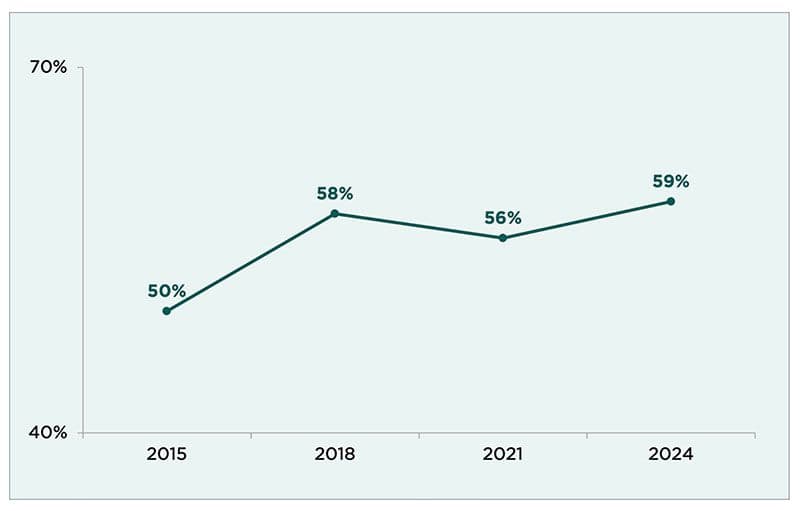
Source: National Youth in Transition Database (NYTD) Outcomes File, Cohorts 1 through 4. The figure includes all foster youth age 21 who reported part-time or full-time employment.
Employment is an important source of self-sufficiency and well-being for young people—including foster youth—as they transition into adulthood. Steady employment supports financial independence, which may provide greater access to resources like stable housing and the opportunity to pursue education goals. Employment also connects young adults with a network of supportive adults who can serve as mentors for both life and career advancement.
Although employment is a gateway to opportunity for young adults, foster youth tend to experience greater barriers to full-time employment and lower wages while employed, relative to their peers who never experienced foster care. Programs like extended foster care can provide more additional years of support, including career preparation, for young people who would otherwise age out of foster care at age 18.
Looking to partner with Child Trends on tracking foster youth employment outcomes and other child welfare indicators? Contact Alaina Flannigan, PhD at aflannigan@childtrends.org.