
The title and opening sentence of this datapoint were edited on 1/9/26 to align with the specifier "substantiated/indicated maltreatment" that appears in the figure title and data source.
Recent Child Trends analyses of the National Child Abuse and Neglect Data System (NCANDS) show that the number of reports of substantiated or indicated maltreatment[1] decreased again in 2023. This finding persists despite the number of referrals to child welfare agencies increasing in 2022 and 2023.

Figure: The number of children with substantiated/indicated referrals for maltreatment in the United States decreased from 2020-2023*
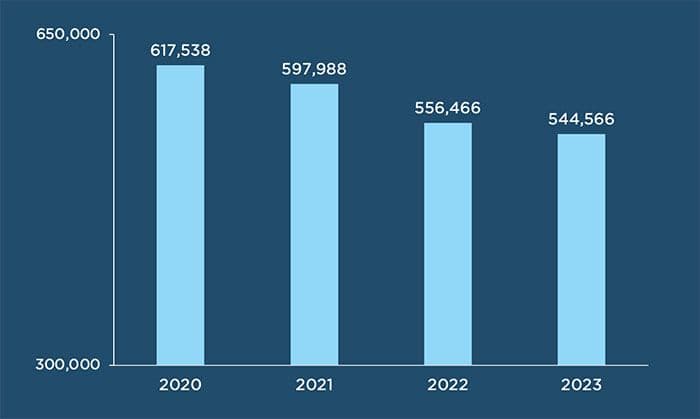
* Percentages for those unknown, unborn, or ages 18-21 are excluded as they represent a very small percentage of the overall total.
Source: The data used in this publication were obtained from the National Data Archive on Child Abuse and Neglect and have been used in accordance with its Terms of Use Agreement license. Unless otherwise noted, for each calculation, children who were missing data on the relevant indicator were excluded from analyses. The Administration on Children, Youth and Families, the Children’s Bureau, the original dataset collection personnel or funding source, NDACAN, Cornell University and their agents or employees bear no responsibility for the analyses or interpretations presented here. Datasets used include: Dataset #237, NCANDS Child File FY2019, Version 5; Dataset #244, NCANDS Agency File FY 2019, Version 3; Dataset #253, NCANDS Child File FY2020, Version 3; Dataset #254, NCANDS Agency File FY 2020, Version 3; Dataset #263, NCANDS Child File FY2021, Version 2; Dataset #264, NCANDS Agency File FY 2021, Version 2; Dataset #279, NCANDS Child File FY2022; Dataset #280, NCANDS Agency File FY 2022
NCANDS data also reveal that child maltreatment rates vary widely across states, with some states showing substantial decreases and others showing increases; this likely reflects differences in how agencies screen for, classify, and respond to maltreatment. Overall decreases are attributable to multiple underlying factors, including alternative response definition and procedure changes, new screening processes, and the enduring effects of the COVID-19 pandemic. Demographically, America’s youngest children continue to be at the highest risk for experiencing abuse and neglect, with over one quarter of all cases among children from birth to age 2. About 30 percent of children who experience maltreatment have been referred to child welfare agencies sometime in the past, underscoring a continued need for prevention-focused supports to reduce recurrent abuse and neglect.
Child Trends experts have compiled these data and other child welfare indicators in the Child Welfare Data Interactive, a one-of-a-kind data tool that allows users to examine state and national child welfare data on entries into foster care, child maltreatment, kinship caregiving, permanency, and older youth in foster care. Data are updated annually upon release of the NCANDS and other related datasets, such as the Adoption and Foster Care Analysis and Reporting System (AFCARS). Currently, federal fiscal year 2023 is the most recent year of available data.
Interested in learning more about rates of child abuse and neglect in the United States and how they have changed over time? Contact Rebecca Vivrette, PhD at rvivrette@childtrends.org.
Footnote
[1] Substantiated or indicated child maltreatment refers to cases in which a CPS agency determines that there is sufficient evidence, under state law and policy, to conclude that abuse or neglect occurred. Indicated often requires a lower evidentiary threshold than substantiated.